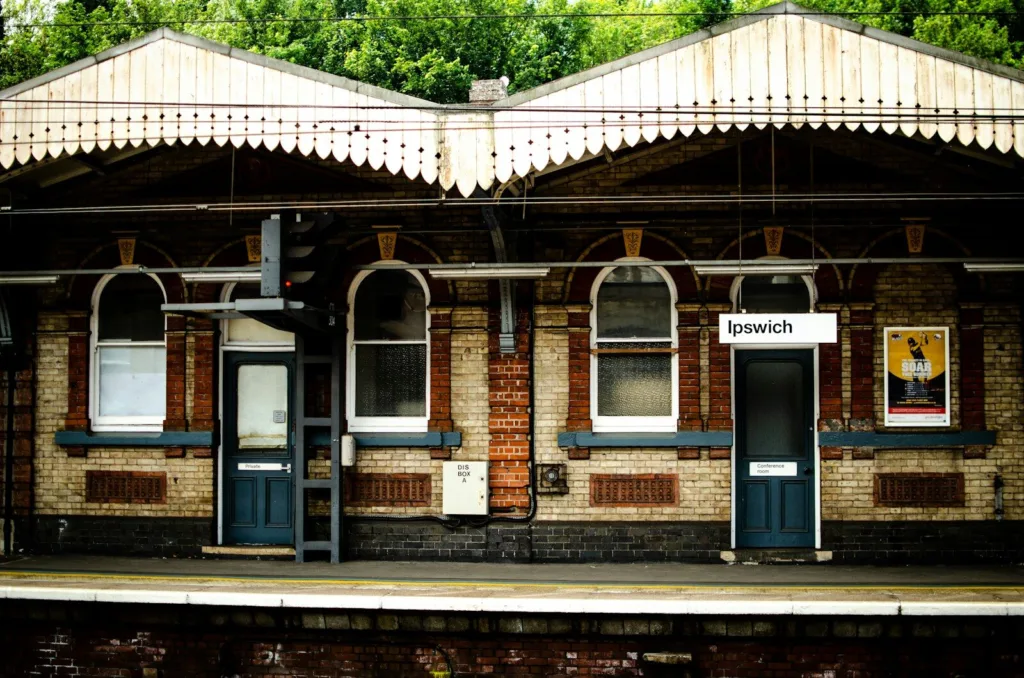
A new national index has sparked questions about community connection in Ipswich. We look beyond the league table at what the figures really measure, the context they miss and the people bringing our town together.
A newspaper headline this week declared Ipswich one of the least-friendly places in the UK.
It is the sort of claim guaranteed to travel quickly. It is also not quite what the research says.
Ipswich has ranked 292nd out of 296 English local authority areas in a new “Connection Barometer” created by the National Conversation. That puts the borough fifth from the bottom of its table.
That result is real. But describing it as proof that Ipswich is the fifth most-unfriendly place in the UK leaves out some rather important details.
This wasn’t a survey asking whether Ipswich people are friendly
The ranking has been created using existing data from the Government’s 2024/25 Community Life Survey.
It combines eight different measures: loneliness, sense of belonging, trust in neighbours, whether people feel residents get along, local pride, how often people chat to their neighbours, volunteering and participation in civic life.
Each local authority is ranked against the other 295 areas on every measure. Those eight positions are then averaged, with equal weighting and no adjustments, to produce one score.
In other words, nobody has conducted a new nationwide test of whether Ipswich people smile at strangers, hold doors open or help someone struggling with their shopping.
This is primarily a measure of connection and participation. Those things matter enormously, but they are not interchangeable with personal friendliness.
It is also an England-only comparison, not a ranking of places across the whole UK.
The source includes caveats that the headline does not
The Connection Barometer describes its score as “a rough guide, not a final measure”.
The National Conversation itself says that government statistics are only part of the picture and that the project has not yet concluded its findings. Its own research is still taking place, with the final results expected later this year.
There are also some interesting details within Ipswich’s figures.
The town records lower-than-average results for belonging, local pride, volunteering, civic participation and the belief that people from different backgrounds get along.
Those findings should not simply be dismissed. They raise genuine questions about whether everyone in Ipswich feels able to participate in community life and whether enough people feel heard, included and proud of where they live.
However, Ipswich’s figures for trust in neighbours, neighbourly conversation and loneliness are described by the barometer itself as being within the survey’s margin of error when compared with the England average.
That is considerably more nuanced than “Ipswich is unfriendly”.
Context matters too
The barometer gives every measure equal weight and does not adjust for the very different circumstances of each area.
The Government’s own analysis found that people in the least deprived areas were considerably more likely to participate in formal volunteering than people in the most deprived areas. Rural residents were also more likely than urban residents to volunteer, feel proud of their area and participate in civic life.
It is perhaps unsurprising, then, that small, rural and relatively affluent areas dominate the top of the table, while larger urban communities are heavily represented towards the bottom.
That does not make the Ipswich results meaningless. It does mean that a league table cannot tell the complete story of a town or the people who live here.
Why this matters right now
The way Ipswich is described matters particularly at this moment.
Ipswich is currently one of nine places competing for a place on the UK City of Culture 2029 shortlist. The expert advisory panel is assessing the full bids and will recommend up to four locations to progress to the next stage.
This does not mean local media should stop scrutinising Ipswich or publish only positive stories. A credible City of Culture bid must understand the town’s challenges as well as celebrate its strengths.
But scrutiny should be accurate, and a provocative label stripped of the source’s own qualifications risks creating an impression that the evidence does not support.
UK City of Culture is not a prize reserved for places that are already perfect. It is intended to use culture and creativity to create lasting transformation, strengthen participation, build civic pride and ensure more people benefit from the opportunities around them.
Seen properly, the Connection Barometer could support the case for why Ipswich needs and deserves that opportunity. If some residents feel disconnected, unheard or unable to participate, that is a challenge to address through investment, community activity and a genuinely inclusive cultural programme. It is not proof that Ipswich people are unfriendly.
There is important local context here too.
Stoke Park and Chantry, and Whitehouse, have each been selected for up to £20 million of government-backed Pride in Place investment over the next ten years.
Pride in Place specifically targets disadvantaged neighbourhoods. Its latest selection methodology considered deprivation, access to community infrastructure, civic participation and community cohesion.
That adds weight to the need for caution when comparing a densely populated urban borough such as Ipswich directly with small, rural or more affluent authorities without adjusting for their very different circumstances.
The Government has not simply identified areas where connection and participation need strengthening. It has committed substantial, long-term investment so that local residents can lead that change.
That is a far more constructive story about Ipswich: a town with recognised challenges, significant opportunities and communities being trusted to shape what happens next.
The Ipswich we encounter every day
At Ipswich.Love, we see a town filled with people giving their time, helping their neighbours, running community groups, supporting local causes, welcoming new arrivals and creating opportunities for others.
We see charities, volunteers, independent businesses, faith groups, sports clubs, artists, community organisers and ordinary residents quietly making Ipswich better.
That does not mean everyone feels connected. Clearly, some people do not, and that is something worth taking seriously.
But reducing an entire town to an “unfriendly” label risks reinforcing exactly the sort of negative perceptions that make it harder to build pride and connection in the first place.
A more useful question would be: what can we do to ensure more people in Ipswich feel that they belong, can take part and have a voice?
Now Ipswich can have its say
The good news is that the National Conversation wants to hear whether its statistics reflect people’s lived experience.
Its survey remains open until 31 August and takes less than ten minutes to complete.
So, whether the description feels completely wrong to you or whether it reflects something you have experienced, this is Ipswich’s opportunity to add some much-needed human context to the numbers.
Take part in the National Conversation
Ipswich is not perfect. No town is. But it is certainly more complicated, more connected and, yes, more friendly than a single league-table position can ever show. And we exist to prove that.
#ForTheLoveOfIpswich
Who wrote this about Ipswich?

Miranda Acres
Miranda has been a Freelance Marketing and Design Consultant for more years than she cares to remember, supporting local start-ups, SMEs and charities. A passionate founder of Ipswich.love. Huge supporter of Ipswich's bid for City of Culture 2029. Born, bred and choosing Ipswich.




No Comments
If comments are open, feel free to leave a comment below. You need to register to comment on posts. We're all about the love & whilst we welcome your comments, we will not tolerate any abusive language or hate speech. Play nicely, people.